2026-02-19
Your Office Breakroom Is a Sustainability Problem
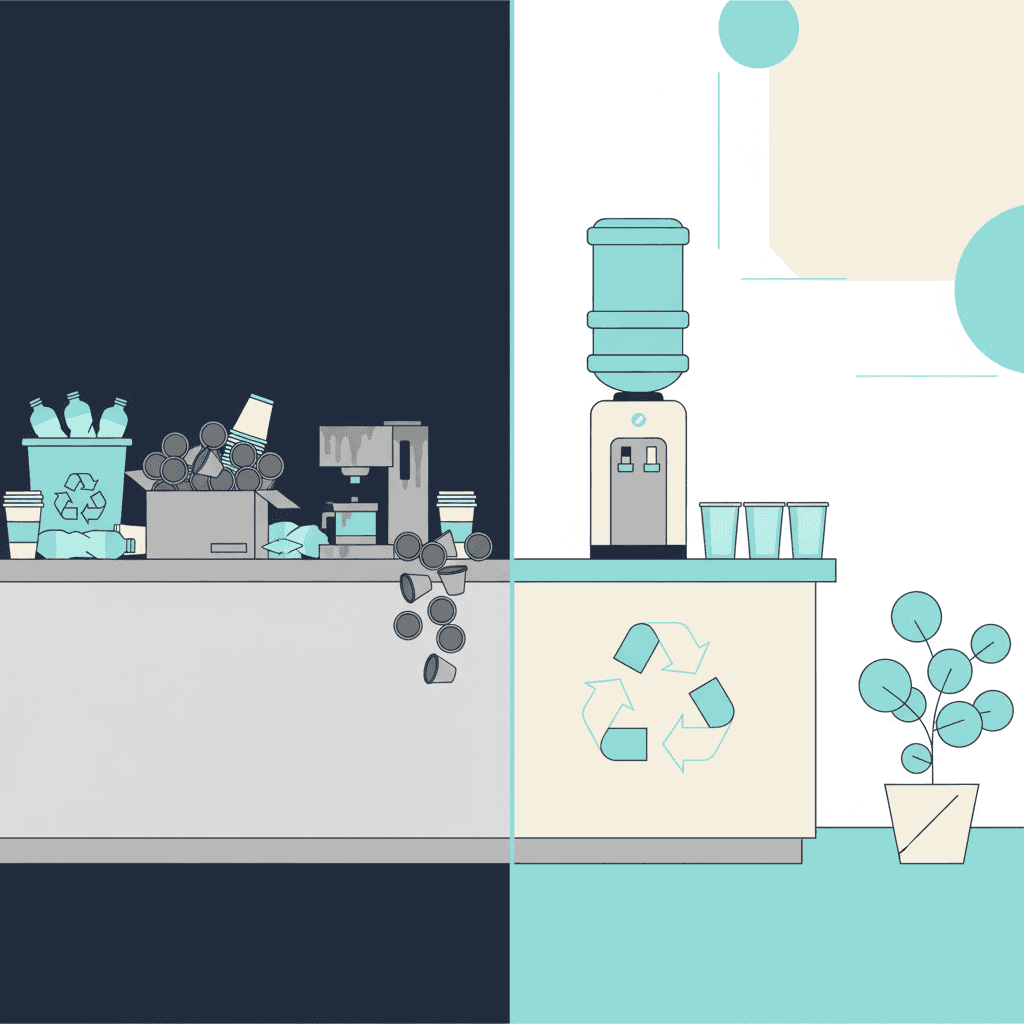
I walk into a lot of breakrooms. It's literally my job. And the pattern is almost always the same: a 5-gallon water jug on a dispenser, a Keurig surrounded by a graveyard of used K-Cups, maybe a case of plastic water bottles someone grabbed from Costco. A recycling bin that may or may not actually get recycled.
Nobody designed this. It just happened. And it's an environmental disaster hiding in plain sight.
The Plastic Math
Let's do some quick math on a mid-size office — say 50 people.
If each person drinks 2-3 cups of water a day from bottled sources, that's 100-150 plastic bottles per day. Over a year, that's roughly 26,000 to 39,000 plastic bottles from a single office. Even if every single one gets recycled (they don't — the actual recycling rate for plastic bottles in the US hovers around 30%), that's still 18,000+ bottles going to landfills or worse.
Five-gallon jugs are better per unit of water, but they come with their own footprint. Each jug weighs about 42 pounds full. A delivery truck hits your office every week or two, burning diesel to haul water that's already flowing through the pipes in your building. The jugs themselves get reused about 40-50 times before they're retired, but they're still plastic being manufactured, cleaned, filled, trucked, and eventually discarded.
The K-Cup Problem
Americans use about 34 billion K-Cups per year. Billion. With a B. The vast majority end up in landfills, where the plastic and aluminum components take centuries to decompose.
Even the "recyclable" pods require you to separate the foil lid, dump the grounds, and clean the cup before recycling. In an office setting, nobody does that. They pop it in, brew it, toss it. Every single time.
I did a speed test video on LinkedIn comparing our Java House cold brew system to a Keurig. Beyond the speed difference, the bigger story is waste. One cold brew concentrate pouch replaces dozens of individual pods. No plastic cups in the trash after every cup.
Delivery Trucks and Hidden Carbon
Every 5-gallon jug delivery means a truck on the road. Route after route, week after week, across thousands of offices. The carbon footprint of water delivery logistics is significant — and completely unnecessary when the water is already in your building.
Point-of-use bottleless systems connect to your existing water line. The water gets purified on-site, on demand. No deliveries. No trucks. No warehouse storage. No loading docks.
At Bottleless Nation, we track the impact for our clients. One of our recent installs — Pineview Veterinary Hospital — is projected to eliminate over 900 pounds of CO2 and 2,000+ gallons of wasted water annually. One location. Multiply that across 10,000+ businesses on our platform and the numbers get real.
The Breakroom-as-Wellness-Hub Reframe
Here's what I pitch to companies, and I mean it: your breakroom doesn't have to be a liability. It can be an asset. A wellness hub.
Clean, purified water on demand. Sparkling water. Flavored options. Ice. Good coffee that doesn't come in a plastic pod. No delivery schedules to manage. No jugs to lift. No bottles to buy, store, or throw away.
It's healthier for your people, cheaper in the long run, and better for the planet. That's not a tradeoff — that's a triple win.
The Budget Angle
Sustainability is a hard sell if it costs more. I get that. But here's the thing: bottleless systems typically cost less than the combination of bottled water delivery, single-serve bottles, and pod coffee that most offices are already paying for.
You're replacing three or four line items with one. No delivery fees. No per-jug charges. No Costco runs for water cases. No pod subscriptions. One flat monthly cost for purified water, ice, and coffee.
Most facilities managers I talk to are surprised when they actually add up what they're spending on breakroom hydration. It's more than they think. Way more.
What You Can Do
If you manage an office, a facility, or even just a breakroom — look at what's in there. Count the plastic. Look at the delivery schedule. Check the recycling bin (or lack thereof).
Then ask: is this the best we can do?
Because it's not. And the alternative isn't some expensive green initiative that requires a committee and a budget meeting. It's a water system that plugs into your wall and makes better water with less waste.
That's it. That's the pitch. I told you I can make anything into an ad.