2026-04-08
Your Brain Needs Water. Your Office Isn't Delivering It.
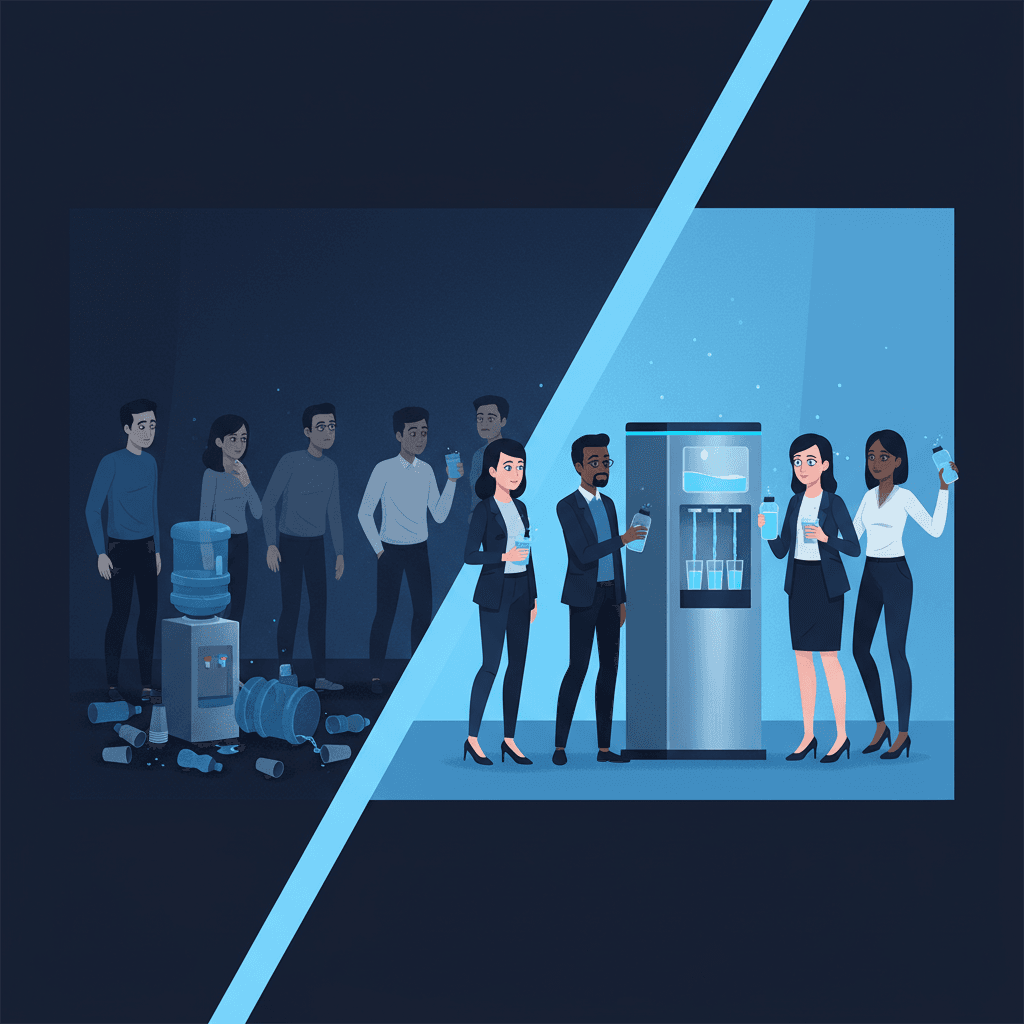
Your 2 PM brain fog isn't from the post-lunch crash. It's from being dehydrated.
Research shows that even mild dehydration can impair cognitive performance, mood, and concentration in working adults. You don't need to lose much water weight before your brain starts to notice. You won't even feel thirsty yet.
But your brain will notice. Decision-making gets slower. Focus drops. Memory struggles.
The Office Hydration Problem
I sell water systems, so I'm biased. But the data doesn't lie.
Most offices treat hydration like parking spots — something you figure out on your own. Water cooler in the corner. Maybe some bottles in the fridge. Good luck staying hydrated during back-to-back meetings.
Studies suggest that office workers who increase their water intake often show improved cognitive performance and report better mood and reduced fatigue.
Think about that. Better thinking. Better mood. Less fatigue. From drinking more water.
Why Your Office Water Setup Fails
The typical office hydration setup has three problems:
Distance kills habit. If water isn't easily accessible, people won't drink enough. They'll grab coffee instead. Or nothing.
Quality matters for quantity. Bad-tasting water means less consumption. That plastic bottle taste? That chlorine smell from the tap? People avoid it without thinking about it.
Convenience drives behavior. If getting water requires walking to another floor, waiting for the cooler to refill, or remembering to grab bottles, it won't happen consistently.
The Real Cost of Poor Hydration
Productivity isn't abstract. When cognitive performance drops, real work suffers:
- Longer time to complete tasks
- More mistakes requiring rework
- Reduced creativity and problem-solving
- Lower quality decision-making
- Increased sick days and fatigue
Your office probably tracks everything else that impacts performance. Internet speed. Software licenses. Chair ergonomics. But hydration? That's treated as personal responsibility.
What Good Office Hydration Looks Like
The best office hydration systems I've installed share common features:
Multiple access points throughout the space. Not one water cooler serving dozens of people.
Great taste that makes people want to drink more. Filtered, purified water that doesn't taste like plastic or chemicals.
Always available. No waiting for bottles to be delivered. No running out during busy periods.
Variety that matches preferences. Still, sparkling, flavored options. Some people won't drink plain water consistently.
The Bigger Picture
Here's what I've learned installing water systems: companies that invest in proper hydration often see changes in employee energy and focus. It's not dramatic. It's subtle but consistent.
Better hydration won't fix bad management or toxic culture. But it removes one invisible barrier to peak performance.
Your team's brains need water to function optimally. Most office setups make that harder than it should be.
The question isn't whether hydration affects productivity. The research is clear on that. The question is whether your office setup helps or hurts your team's cognitive performance.
Most offices are failing this test without realizing it.