2026-04-24
April Weather Is Making Your Office Water Worse Right Now
Your office water tastes different this month. It's not in your head.
I sell water systems for a living, so I'm biased. But the science behind why April water hits different is real.
Spring Runoff Changes Everything
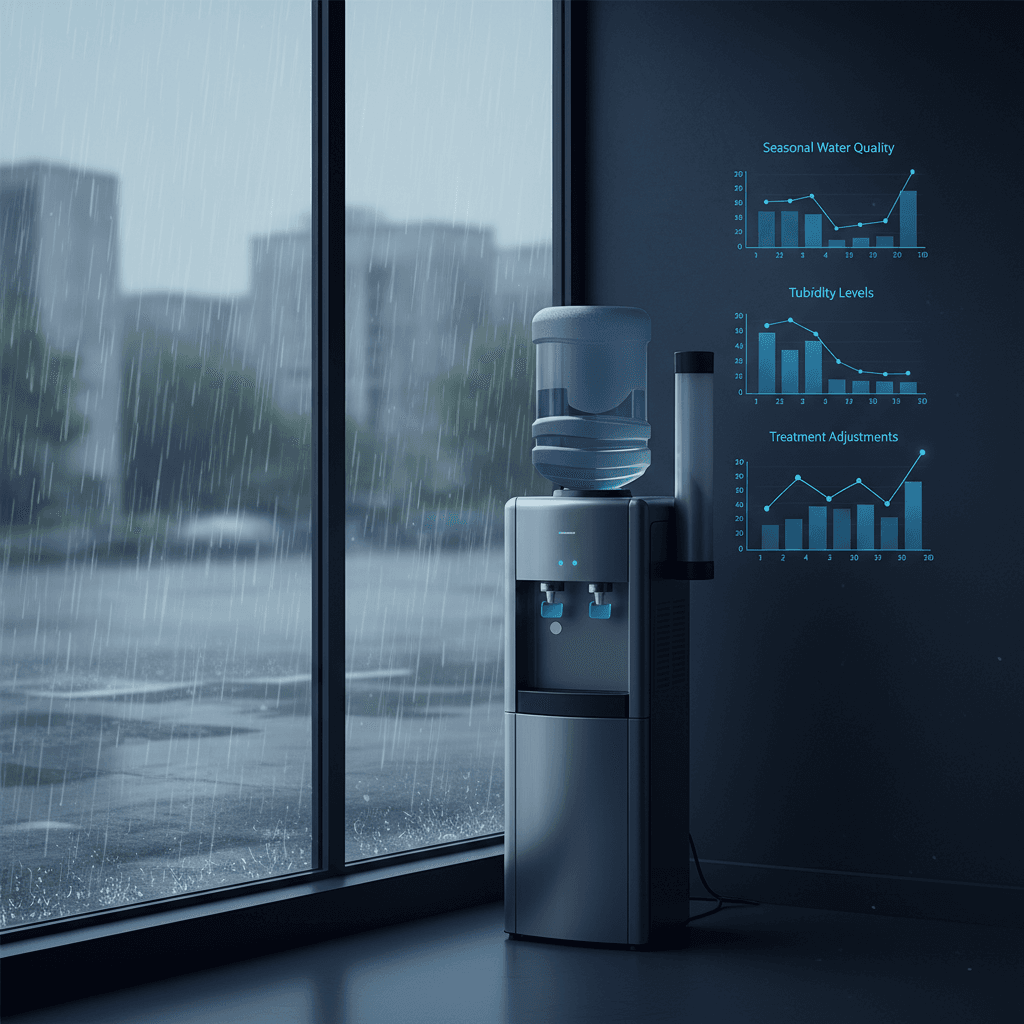
Right now, spring runoff and heavy rainfall are increasing turbidity and organic matter in source water. Your municipal treatment plant is scrambling to adjust.
More mud in the water means more coagulation chemicals. More organic matter means different filtration cycles. Your water plant is working overtime to meet safety standards.
Your water tastes different now. It smells different. Same safety, but your team notices.
Temperature Swings Hit Treatment Hard
Temperature swings are common in spring. That temperature variation isn't just rough on your commute.
Seasonal temperature variations affect chlorine demand in drinking water treatment. Warmer temperatures need higher chlorine doses for proper disinfection.
Your water plant operator monitors temperature changes and adjusts chlorine levels accordingly. Your office water may have that pool smell as a result.
Why This Matters for Your Team
I see this every April. Facilities managers call asking why their water "went bad."
It didn't go bad. It's still safe. But when water tastes like chemicals or has an off smell, people drink less. Dehydrated teams perform worse.
Your municipal system is doing exactly what it should. Meeting EPA standards. Keeping you safe. But they're not optimizing for taste.
The Real Problem
Municipal treatment plants optimize for compliance, not customer experience. They have to. Public health comes first.
But your office isn't a compliance problem. It's a performance problem. When water tastes bad, consumption drops. When consumption drops, productivity follows.
You can wait for summer when temperatures stabilize and runoff decreases. Or you can control what you can control.
Point-of-Use Makes Sense
I install bottleless systems because they solve this exact problem. Point-of-use filtration removes the chlorine taste and chemical smell that April treatment changes create.
Same municipal water. Same safety. Better taste. Better hydration. Better performance.
Your facilities budget already covers bottled water delivery. The math usually works to switch to bottleless and get consistent water quality year-round.
What This Means
April water changes are predictable science. Spring runoff increases treatment complexity. Temperature swings require more chemicals. Your office feels both.
Municipal systems are doing their job perfectly. They're just not optimized for what your team needs to perform well.
The weather will keep changing. Treatment plants will keep adjusting. Your office water will keep tasting different every season.
Unless you decide to control what you can control.