2026-04-04
Most Americans Have PFAS in Their Blood. Your Office Water Might Be Why.
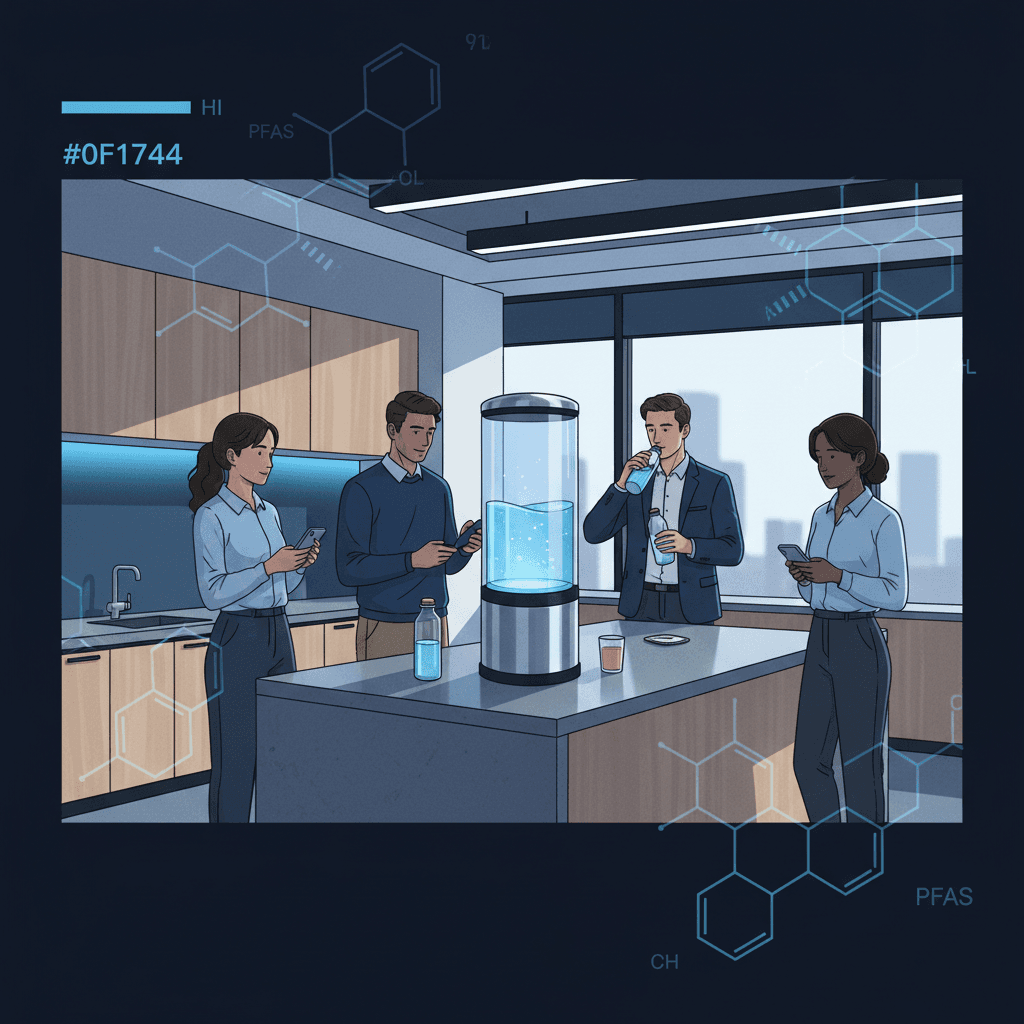
PFAS chemicals have been found in the blood of nearly all Americans, according to CDC biomonitoring data.
Let that sink in. These "forever chemicals" are in nearly every single person in this country.
Full disclosure: I sell water systems for offices. But that doesn't change the reality here.
Your Office Water System Isn't Helping
Most offices still rely on municipal water or basic filtration that doesn't touch PFAS. The EPA has found that some public drinking water systems have detectable levels of PFAS chemicals.
PFAS testing is expensive and complicated. Many water systems haven't been checked yet. And "detectable levels" doesn't mean "safe levels" — it just means we found them.
Your office might be getting water from one of those contaminated systems. And even if it's not, PFAS can enter water through old pipes, contaminated groundwater, or industrial sources nearby.
The EPA Finally Set Standards
In April 2024, the EPA announced the first-ever national drinking water standards for PFAS, requiring public water systems to monitor for six PFAS chemicals and reduce them to near zero levels by 2029.
That's progress. But it's also five years away. And those standards only apply to public water systems — not the private wells or older infrastructure that many offices rely on.
Even after 2029, compliance will take time. Water systems need to install new treatment technology, train operators, and figure out funding. It won't happen overnight.
Your Employees Are Drinking This Every Day
I walk into offices all the time where people are filling up water bottles from the kitchen tap. Or drinking from water coolers that haven't had their filters changed in months. Or using those big 5-gallon jugs that sit in storage rooms getting warm.
OSHA guidance requires employers to provide clean drinking water under occupational safety standards. But "clean" has different definitions.
OSHA's standards were written before we understood PFAS contamination. The rules focus on bacterial contamination and basic safety. They don't address forever chemicals.
The Breakroom Connection to Employee Health
Here's what most companies miss: employees who have access to workplace wellness programs show significant reductions in sick days according to the CDC.
Water quality is part of that equation. Proper hydration affects everything from cognitive function to immune response. And if that water contains PFAS, you're not just failing to help — you might be making things worse.
Most employees spend 8+ hours a day at the office. That's a lot of water consumption from whatever system you've installed.
What Actually Works Against PFAS
Basic carbon filters don't remove PFAS effectively. You need reverse osmosis or specialized activated carbon designed for these chemicals.
RO systems work. They can remove the vast majority of PFAS when properly maintained. But they need regular filter changes and monitoring to stay effective.
I see too many offices with RO systems that haven't been serviced in years. The filters are saturated, the membranes are fouled, and they're not removing anything anymore.
The Real Cost of Waiting
Every day you wait is another day your employees are potentially consuming PFAS at work. With most Americans already carrying these chemicals in their blood, the last thing you want is your office adding to the problem.
The EPA's 2029 deadline might feel far away. But PFAS contamination is happening right now. In your employees' bodies. Every single day.
Your office water system is either part of the solution or part of the problem. There's no middle ground with forever chemicals.